Phenix devices
Two small, tough devices designed to be cheap and built only from common parts, so they can be repaired with what's left in old electronics.
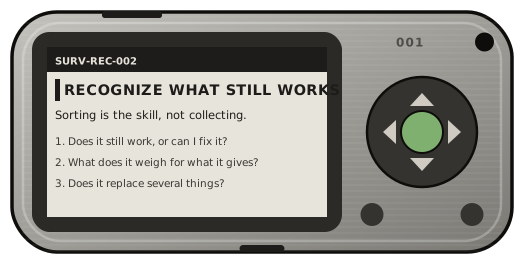
Phenix 001 — the pocket reader
The size of a Flipper Zero, and it holds a whole library. An e-ink screen you can read in full sun, a steel case, a D-pad, and a microSD slot on top.
- ScreenE-ink, readable in full sun. Color e-ink on the C version.
- Storage32 to 64 GB built in (target), plus microSD: room for a whole regional library, its maps and its diagrams.
- CaseSteel, with a laser-engraved logo. Five colorways, the same parts inside.
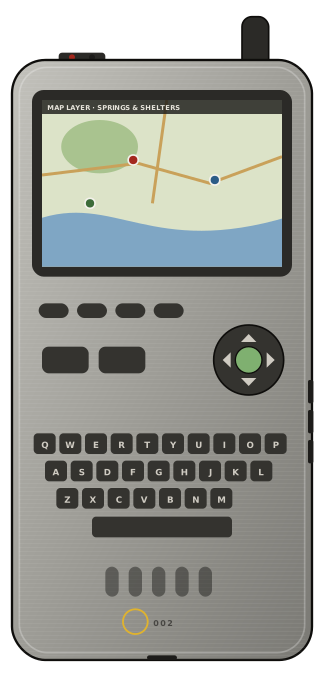
Phenix 002 — closer to a calculator than a computer
About the size of a paperback. A color screen, a real keyboard, and a long-range radio to send messages when there's no network left.
- RadioLoRa long-range radio: messages between devices, no network needed.
- Storage256 GB built in (target), and room for two or three SD cards at once.
- DiagnosticA diagnostic port to test a salvaged part before you wire it in.
Built from what the world already has
Common parts only
No custom parts: every component has a twin in everyday devices. When a screen breaks or a battery dies, the replacement is probably already lying in a drawer somewhere.
Opens with a screwdriver
No glue, no special screws: every layer comes apart. Cracked screen? Wire in one from an old device with four jumper wires, and it reads again.
They share everything
Plug two together, by cable or magnetic pins, and they swap sheets, maps and notes, checking every signature. Each device becomes another copy of the library.
Power when there's none
18650 cells, the most common battery size in the world, in a LiFePO4 pack chosen for safety and long life. It charges over USB-C, magnetic pins, a clip-on crank or a folding solar panel.
Read the version on the logo
A painted ring around the engraved logo tells you which model you're holding: none for the base model, yellow for color e-ink, blue for the local AI assistant, both for both.

Five colorways — brushed steel, plain grey, military green, matte black, signal red — and exactly the same parts inside.

A price anyone can pay
The goal is a device that's genuinely cheap: cheap enough for every school, village and town hall to have one, like the defibrillator next to the door.
Concept renders, not the final design. No dates and no prices until a prototype works.
Want to help build it? Electronics, firmware, case design, testing: come and talk on r/PhenixProject or open an issue on GitHub.